A visible lift from the first session — with your hands only.
The Asian Lift Method is not a facial. It is a 7,000-year-old protocol that works muscle, meridians, lymph and fascia at the same time — and it has been taught master to student, almost never written down. Here it is written down.
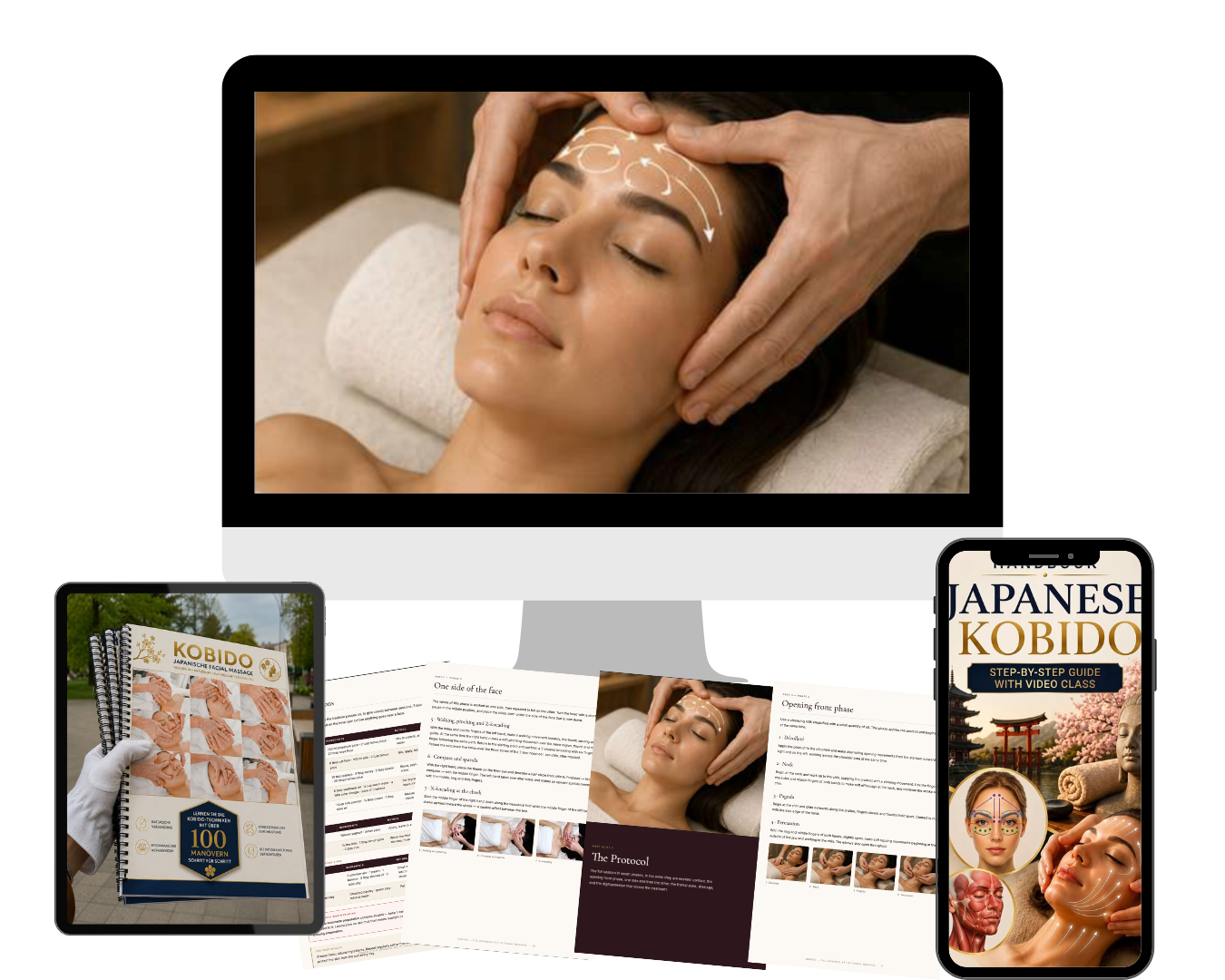
The complete manual — tradition, the session step by step, and an atlas of every technique
101-page manual · 54 techniques, one per page · 5 practical video lessons · instant download · yours for life
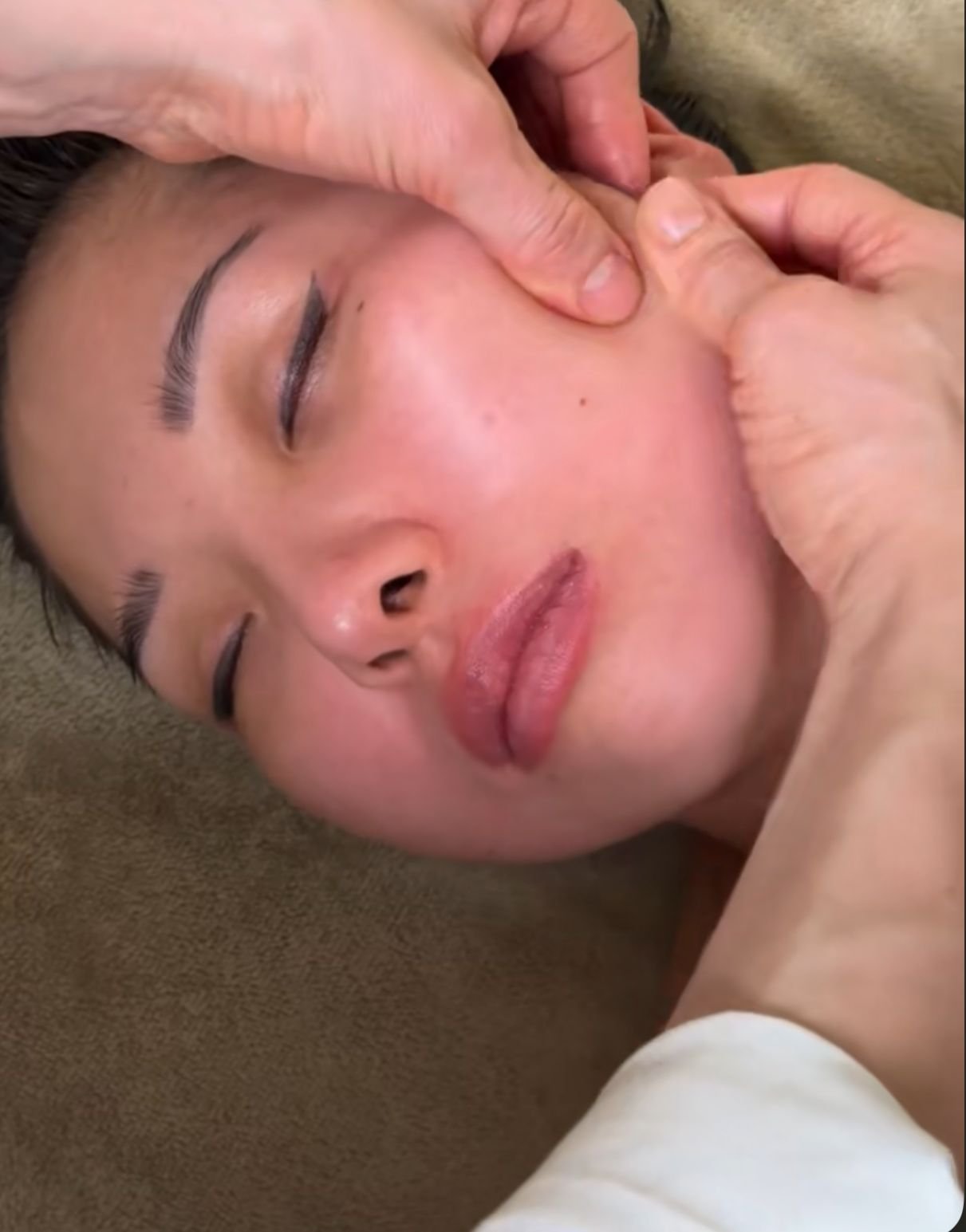
The hands at work
The Asian Lift Method was transmitted master to student, closer to a family apprenticeship than to a training. That is exactly why so few can perform it.
It was never conceived as a cosmetic treatment. In 1472 it became the official anti-age massage of the Japanese imperial line — and outside that lineage, it is still barely practised. Most of what circulates online is a handful of movements with a Japanese name attached.
A facial massage × A protocol
Working without a method
- You know some lifting movements, but not the order they belong in
- You start at the face, because nobody told you the session opens at the shoulders
- Pressure is a guess — you push harder when you want a stronger result
- You have no idea how many repetitions a technique actually needs
- Drainage gets cut when you are short on time
- You cannot name what you did, so the client cannot value it
- The result changes from client to client, and you do not know why
Working from the Asian Lift Method
- Fourteen steps in a fixed order, from contact to the close of the session
- Contact is established before a single technique is performed
- Even pressure, never pain — the rule that governs every entry
- Repetition ranges and rhythms per minute, written for each technique
- Drainage has its own step, and it is never the one you cut
- A named imperial method with 7,000 years behind it
- The same session, repeatable on any face in front of you
The Asian Lift Method
three rules that govern every technique
Contact first
The treatment opens at the shoulders, not at the face. Contact is established before a single technique is performed — it is what makes the face receive the work instead of resisting it.
Even pressure, never pain
Slow and controlled, never abrupt. Within the physiological limit of the joint, never past it. If a technique hurts, the answer is less pressure — not fewer repetitions.
Always with a medium
Glide cream or oil, always. Dragging dry skin is the fastest way to irritate a face — and the fastest way to lose the client you just lifted.
Three parts. One complete method.
The Tradition
Where the Asian Lift Method comes from and — new in this edition — what is actually under your hands. Three layers, three kinds of work: skin, muscle and fascia, and which group of techniques reaches each one. Then the face region by region: forehead and brow, eye, mid-face, mouth and chin, jaw and temple, neck and shoulders. Plus skin types, the conditions that change the session, meridians, reflex zones, the six families of technique and natural preparations.
The Protocol
The session itself, step by step: contraindications and preparation, contact, the opening front phase, the forehead, one full side of the face and the change of side, the frontal zone, eyes and forehead, closing and cleansing, drainage, and the digitopression sequences of skull and face — then five pages on how to adapt all of it to the face actually in front of you.
The Atlas
54 techniques, one per page, so the book can lie open beside you and be read at arm's length while your hands are working. Neck and shoulders, face, eyes and ears — each page with the hold and the movement step by step, what it does, the professional tip that stops it going wrong, and the figure number from the original plates.
Everything in the protocol
is built from six movements
Learn these six and the whole session stops being a list of steps to memorise.
Pendular pressure
Single-digit pressure with the thumb, fixed on the zone while the relaxed hand moves like a pendulum.
Kneading & rubbing
Palm and fingertips, centripetal circles at roughly 120 a minute, with steady force in a straight line.
Pressure techniques
Pressing, pointing, pinching, grasping, clamping and stretching — each takes different tissue and reaches a different depth.
Vibration
Shaking — up and down, left and right — and oscillation.
Percussion
With the palm, with the fist, and the light finger percussion that falls like rain.
Joint mobilisation
Lifting and extending, rocking and turning, and the corrective cradling of the lower cervical spine.
The aim of all six: balance the energy, improve circulation, clear the tissue, relieve tension, and bring back the natural condition and vitality of the face.
One protocol, six faces
The protocol is written for a face with nothing particular wrong with it. Almost no face is that face. These five pages say which phases to lengthen, which to shorten and which to leave out — for the six presentations you will actually meet. The order never changes: contact, work, drainage. Only the weight given to each part does.
Puffiness, a heavy face on waking
Drainage doubled, percussion halved.
A clenched jaw, grinding, headaches
The jaw and temple group extended; the rest shortened to make room.
Dull, tired skin
With no particular complaint attached to it.
Lines, and reactive skin
Two presentations that ask for opposite pressures.
Rosacea
And the client you should not treat today.
The male face, and the older face
Thicker tissue, looser tissue — and what each one changes.
A real look inside
The hold and the movement
Step by step, in the order they happen.
The purpose and effect
As the method teaches it — not as a guess.
Professional tip & plate number
The note that stops the technique going wrong, and the cross-reference to the original drawings.
Results from professionals
using the Asian Lift Method
Swipe through before and after, from real sessions.
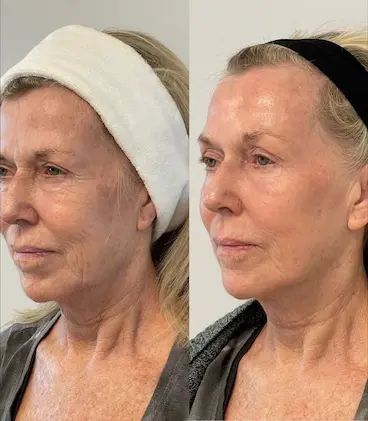
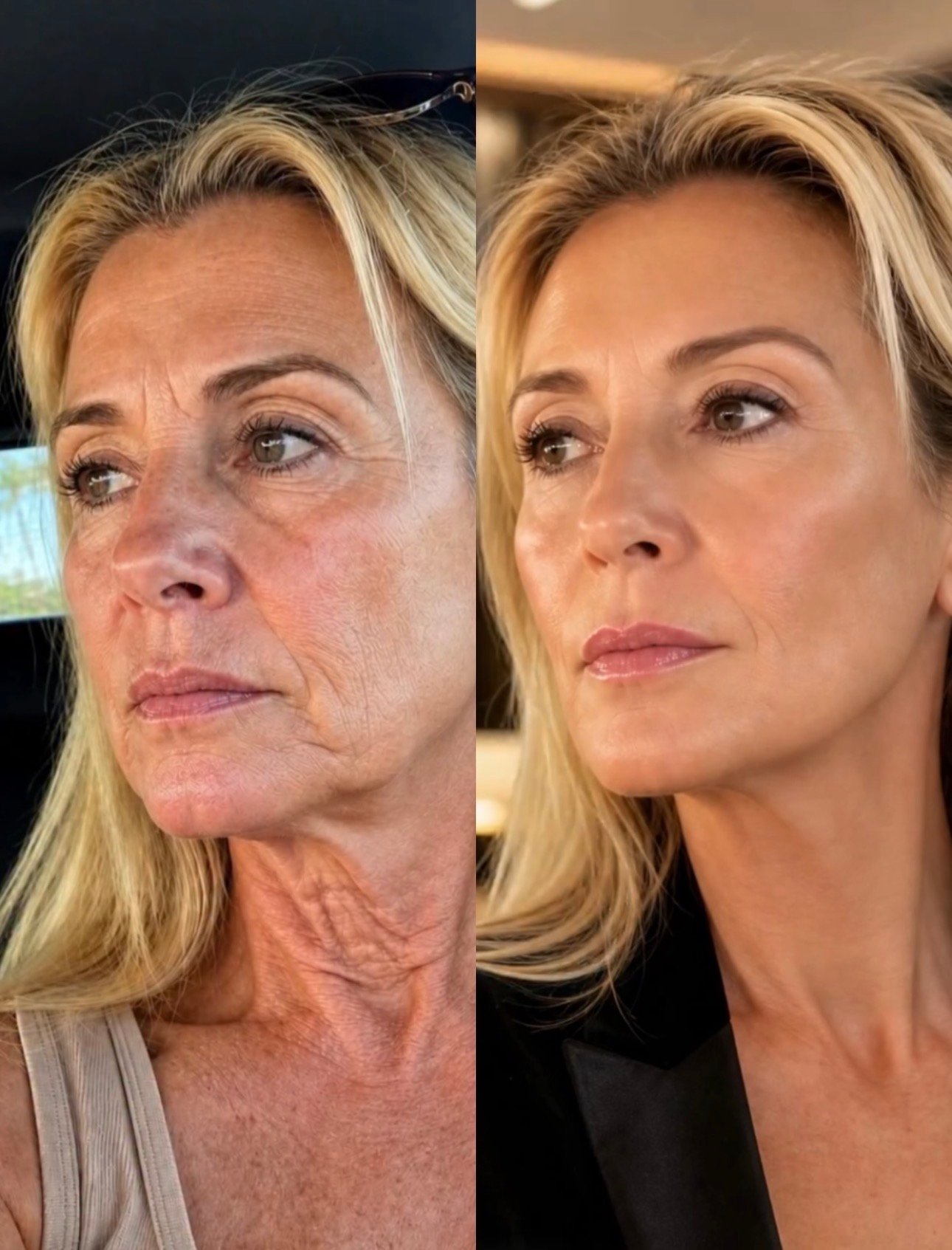
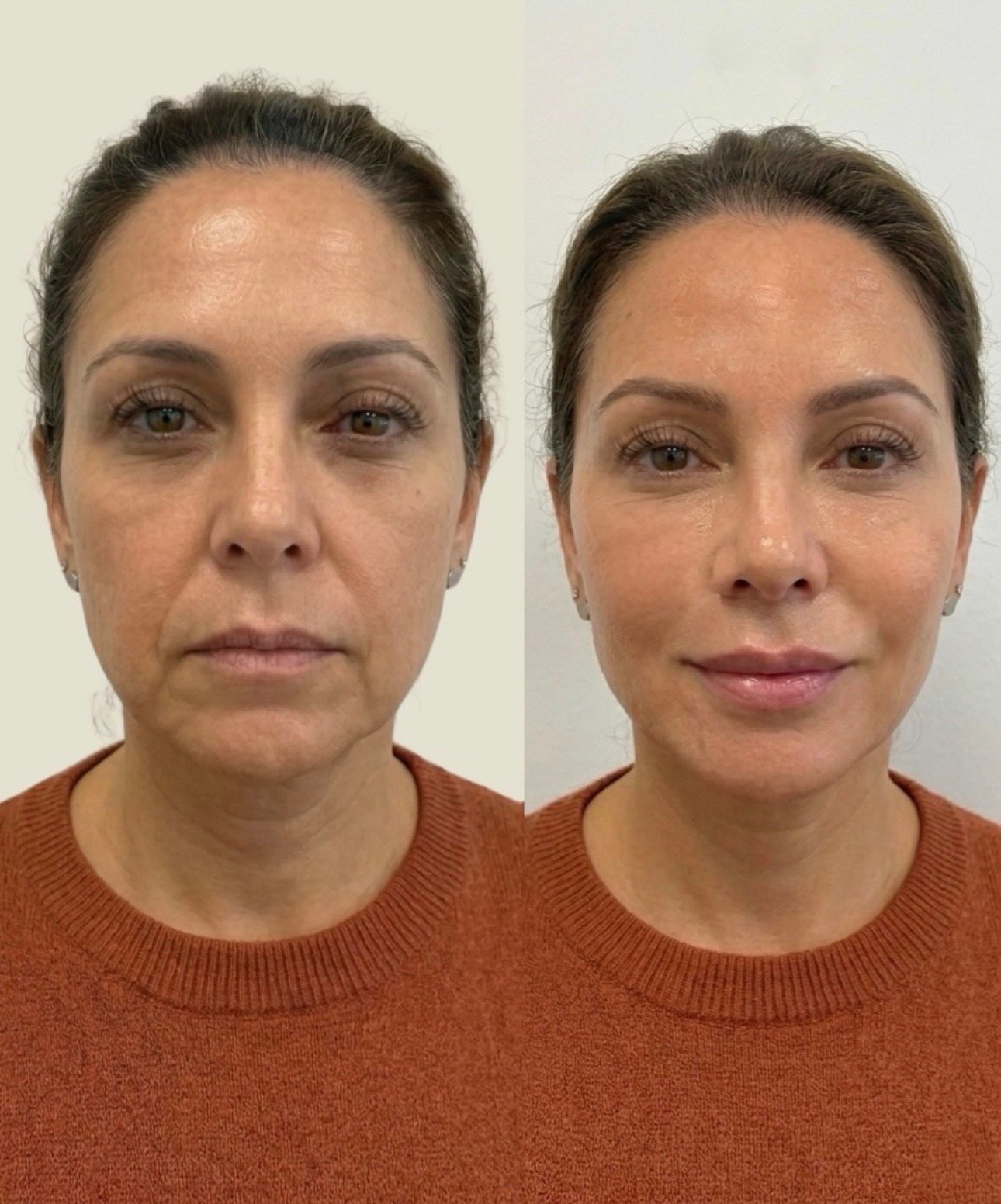
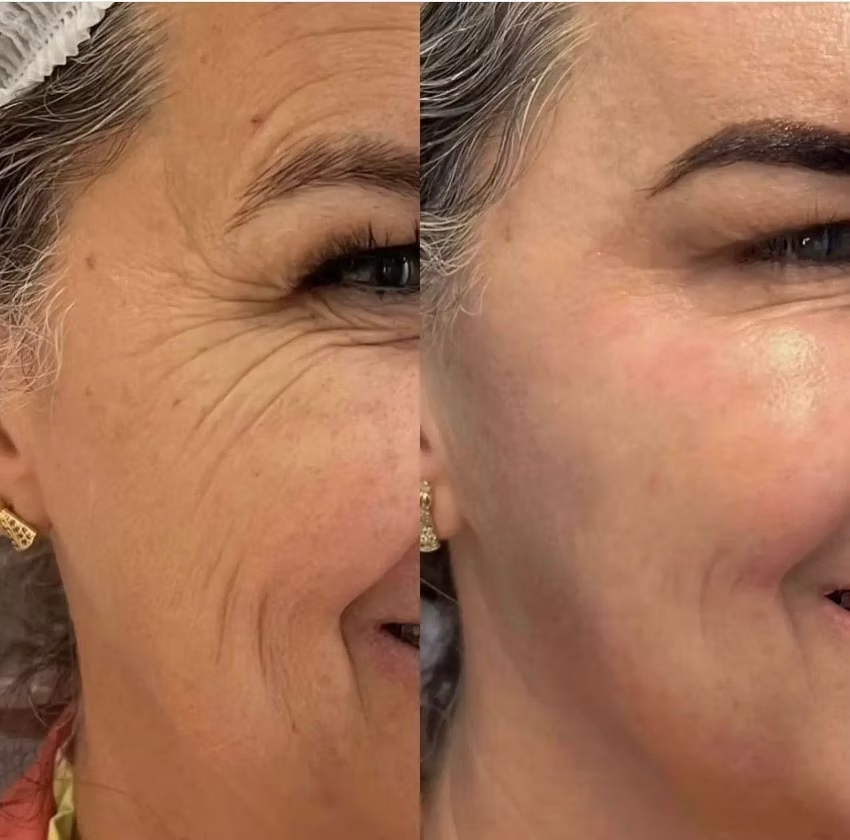
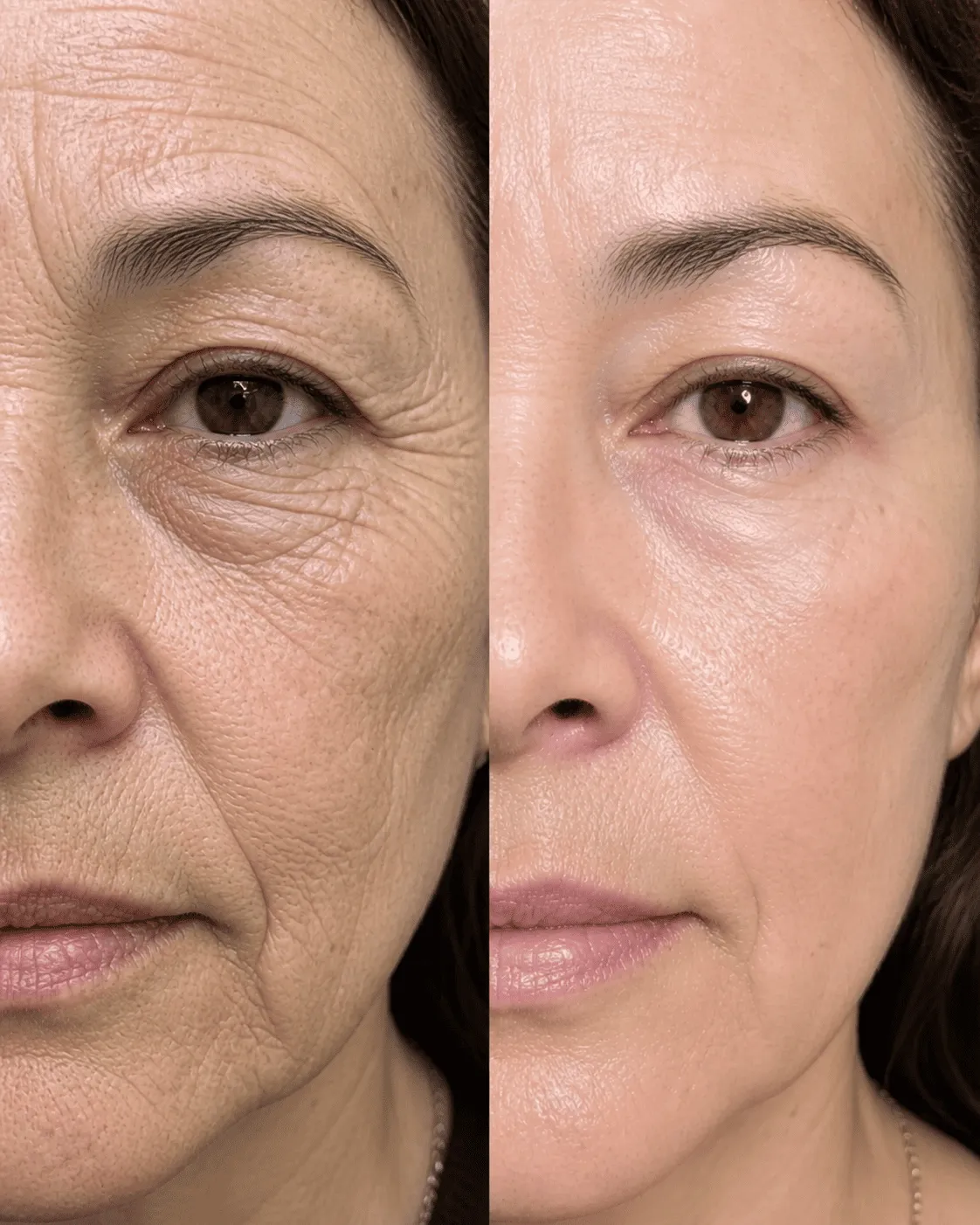
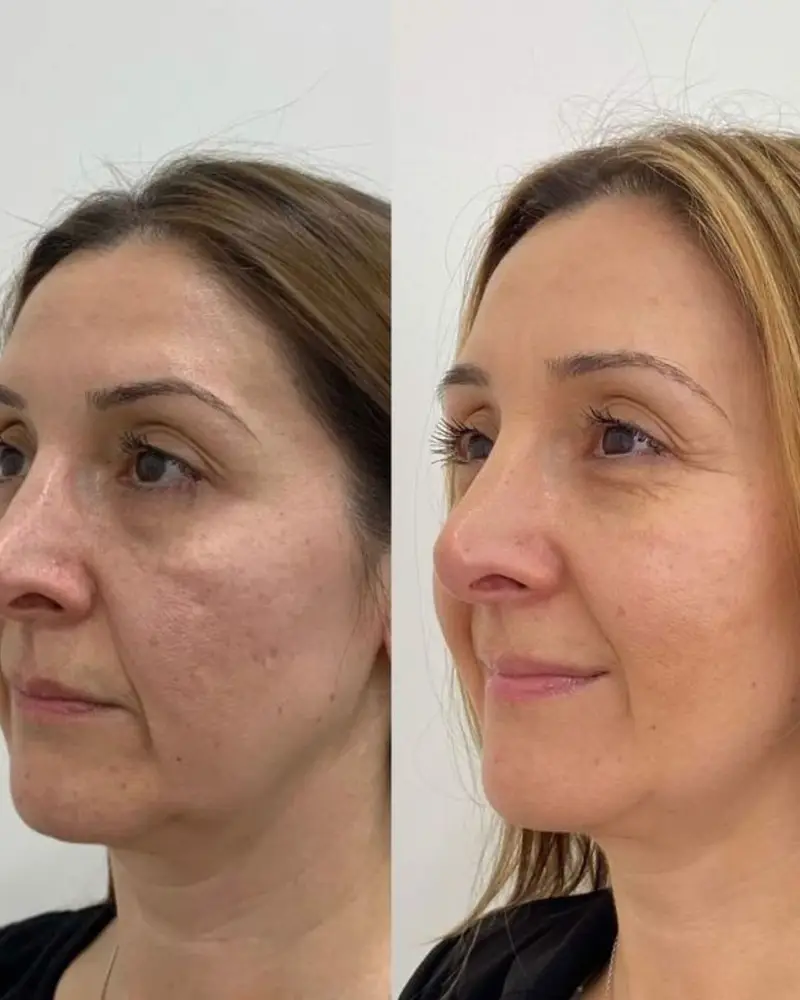
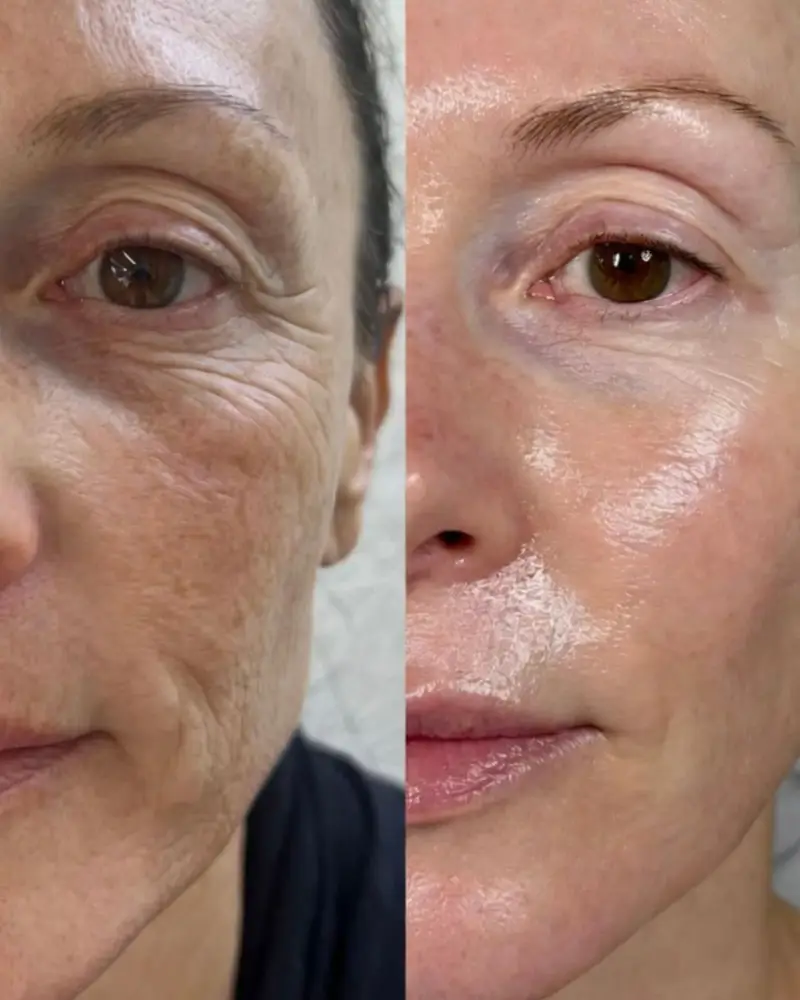
Individual results vary from person to person.
Everything the session touches
…all of it in one session, in a fixed order.
This manual is for you if…
- You already do facials and want a treatment nobody near you offers
- You know a few lifting movements but never learned the full session
- You want a visible lift without machines, needles or product cost
- You want a named method you can put on your price list at a premium
- You want a treatment clients book in a course of sessions, not once
- You want the tradition behind it, not just the movements
A working manual for professionals — not an introduction to massage.
4 bonuses included
23 extra pages that answer what the manual assumes you already have.
Express & Signature
The full protocol runs about 90 minutes, and almost nobody books that first. Four shortened sequences — 15, 30, 45 and 75 minutes — that keep the shape the method requires (contact → work → drainage) and cut only from the middle. Plus a page on how the four sit on your price list.
Consultation & Records
The forms the manual assumes you already have: an intake with a 12-contraindication screen, a five-minute skin-reading grid (and what each reading changes in the protocol), a session record, and the 7-session course on a single sheet. All printable.
Asian Lift at Home
A 10-minute self-massage routine, written in the second person so you can hand it to your client printed exactly as it is. Six movements from the method that are safe to perform on yourself, a table of what shows up in which week, and the five mistakes.
Points & Meridians
Every point and zone the manual cites, gathered in one place: the 7 named points with location, pressure and count; the treatment zones with their direction of work; the 15 reflex zones. It is what stays on the trolley, not in the chapter.
Not theory — twenty years of practice
Every sequence in this manual was performed, adjusted and repeated on real faces before it was written down.


Hèléne Marchal
Esthetician · 20+ years in the treatment roomThe Asian Lift Method reached the West through a lineage that taught it master to student, rarely on paper. What exists online is a handful of movements with a Japanese name attached — and that is why so few professionals can actually run a full session.
This manual is that session written down: the tradition behind it, the fourteen steps in order, and an atlas of every technique with its pressure, its rhythm and its count.
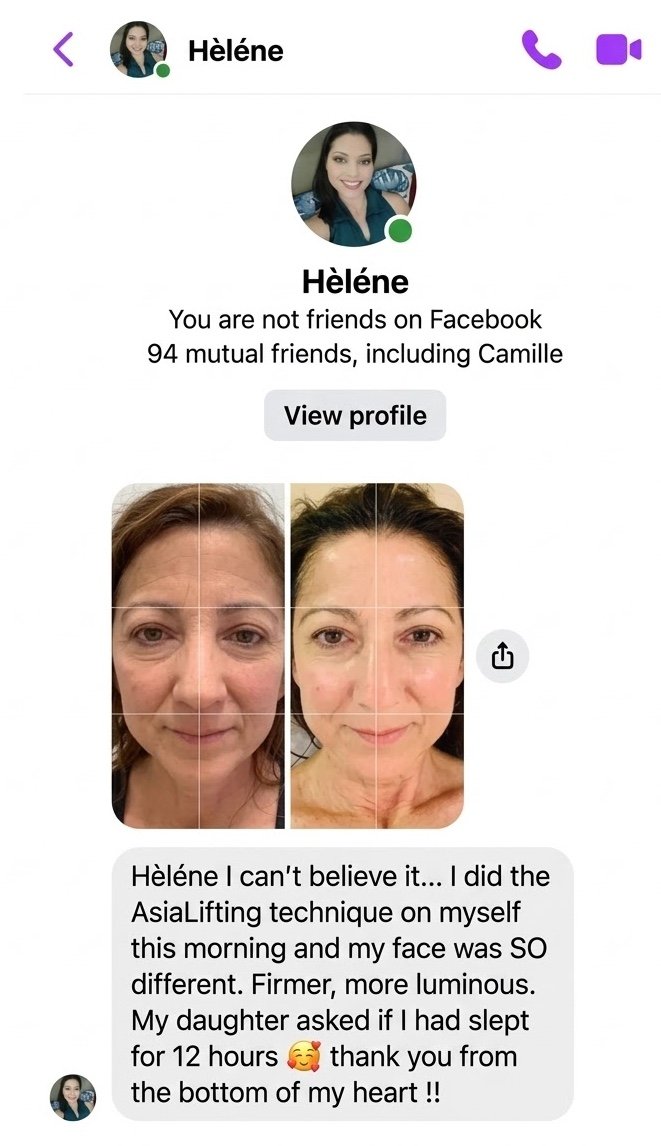
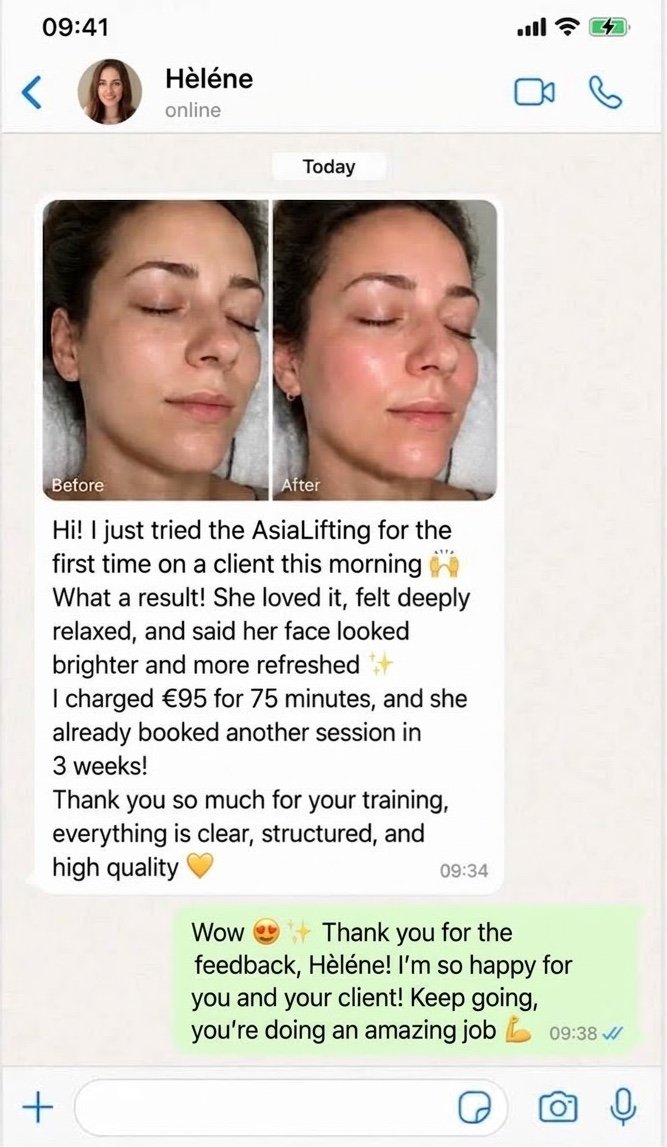
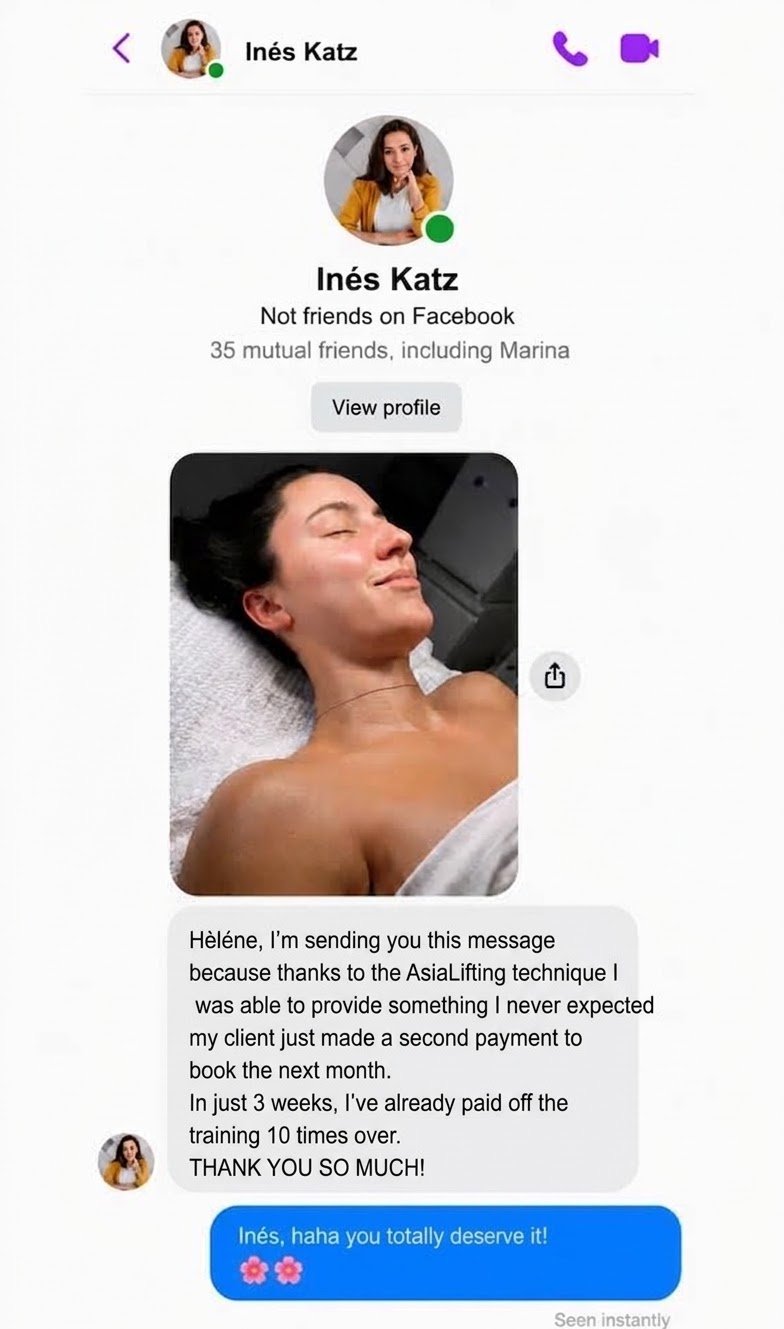
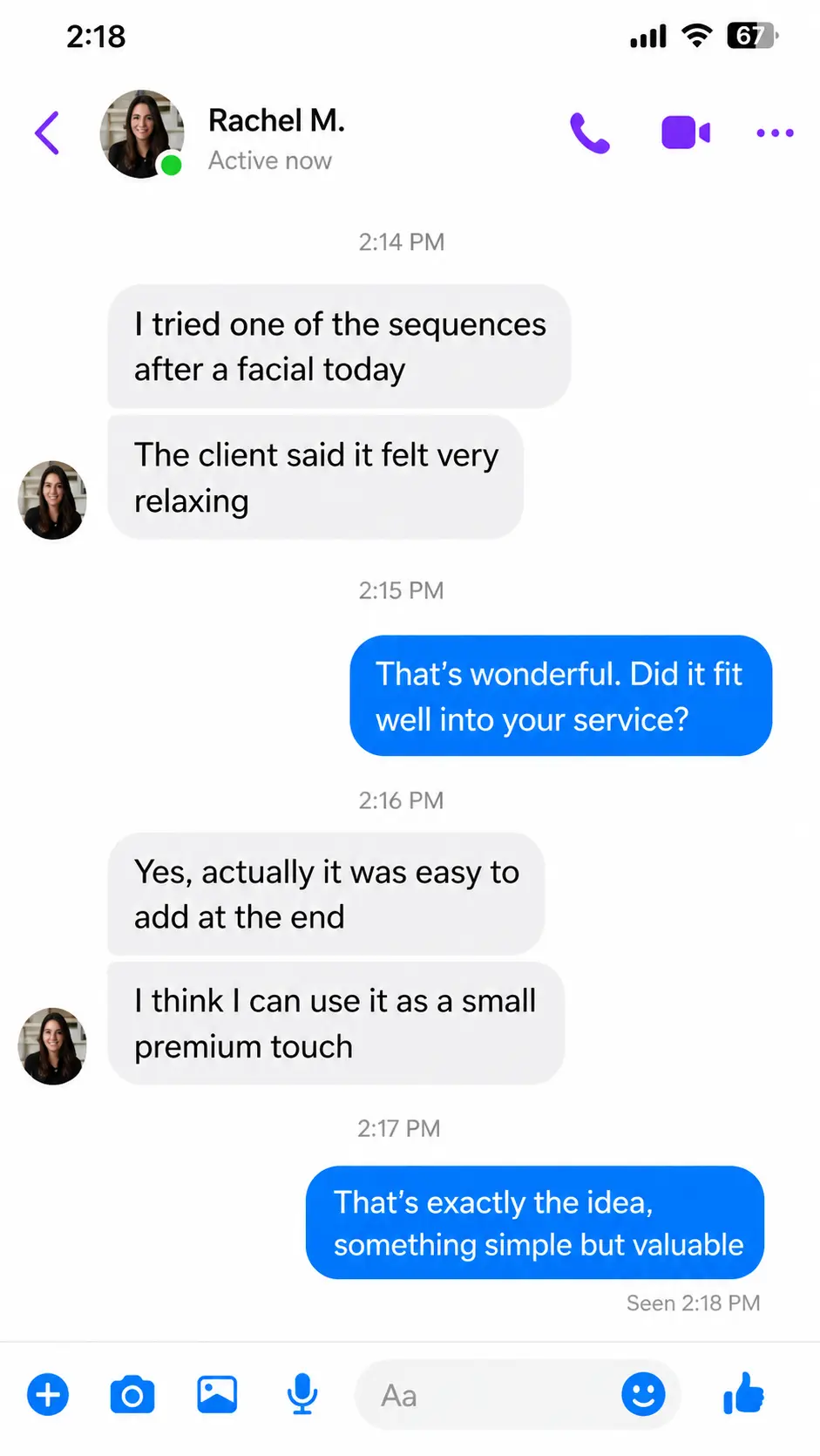
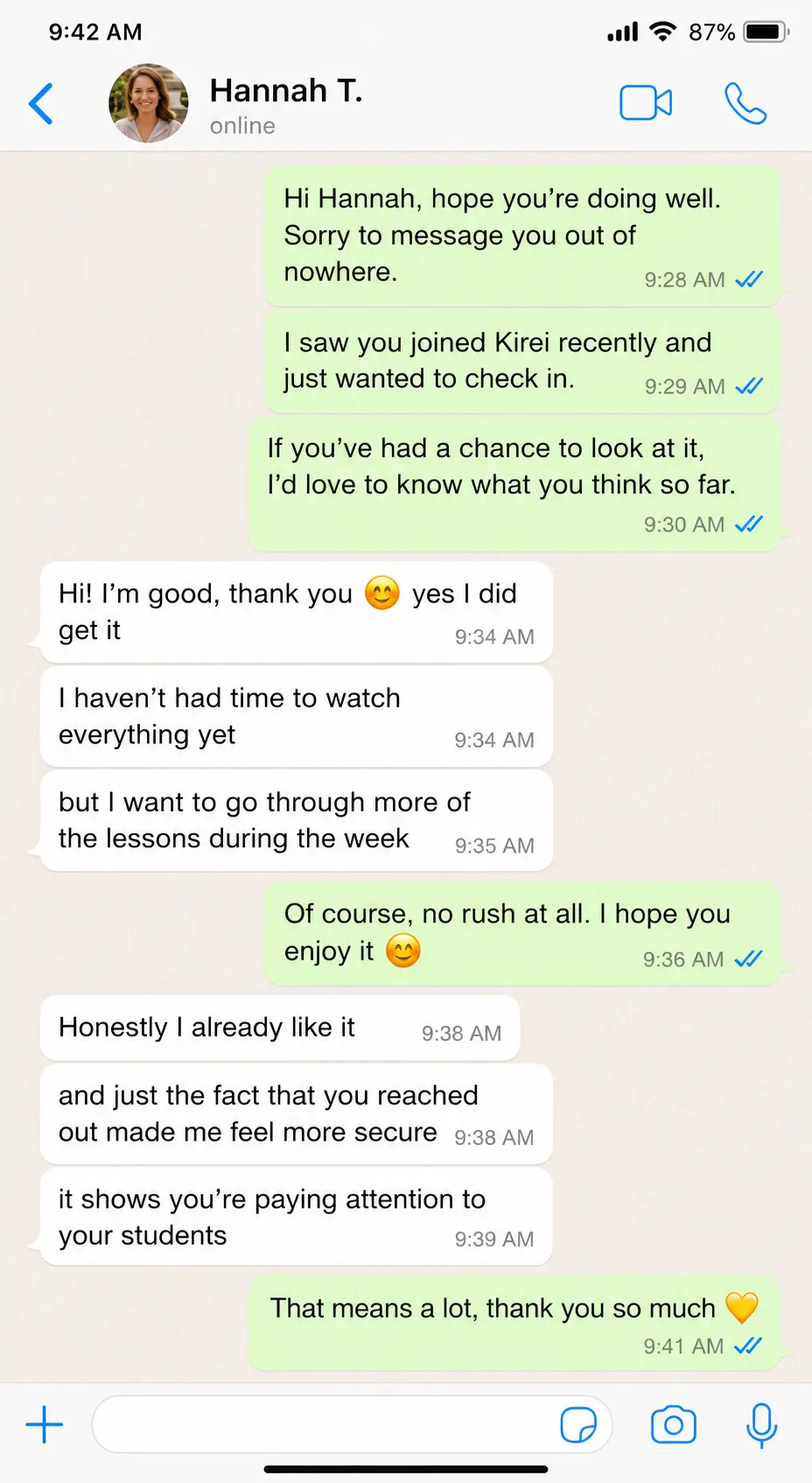
What changes in the treatment room

Full access. One single payment.
One-time payment · Instant download · Yours for life
I want the Asian Lift Method⚠️ When the launch phase ends, the price returns to $97 without notice.
Your questions, answered
Do I need previous experience with facial massage?
How long does a full session take?
Do I need machines or special products?
Is it a PDF or video lessons?
Can I use it on myself?
Does my access expire?
Are the bonuses included automatically?
Seven thousand years,
finally written down.
The complete protocol — yours today.
I want the Asian Lift Method